
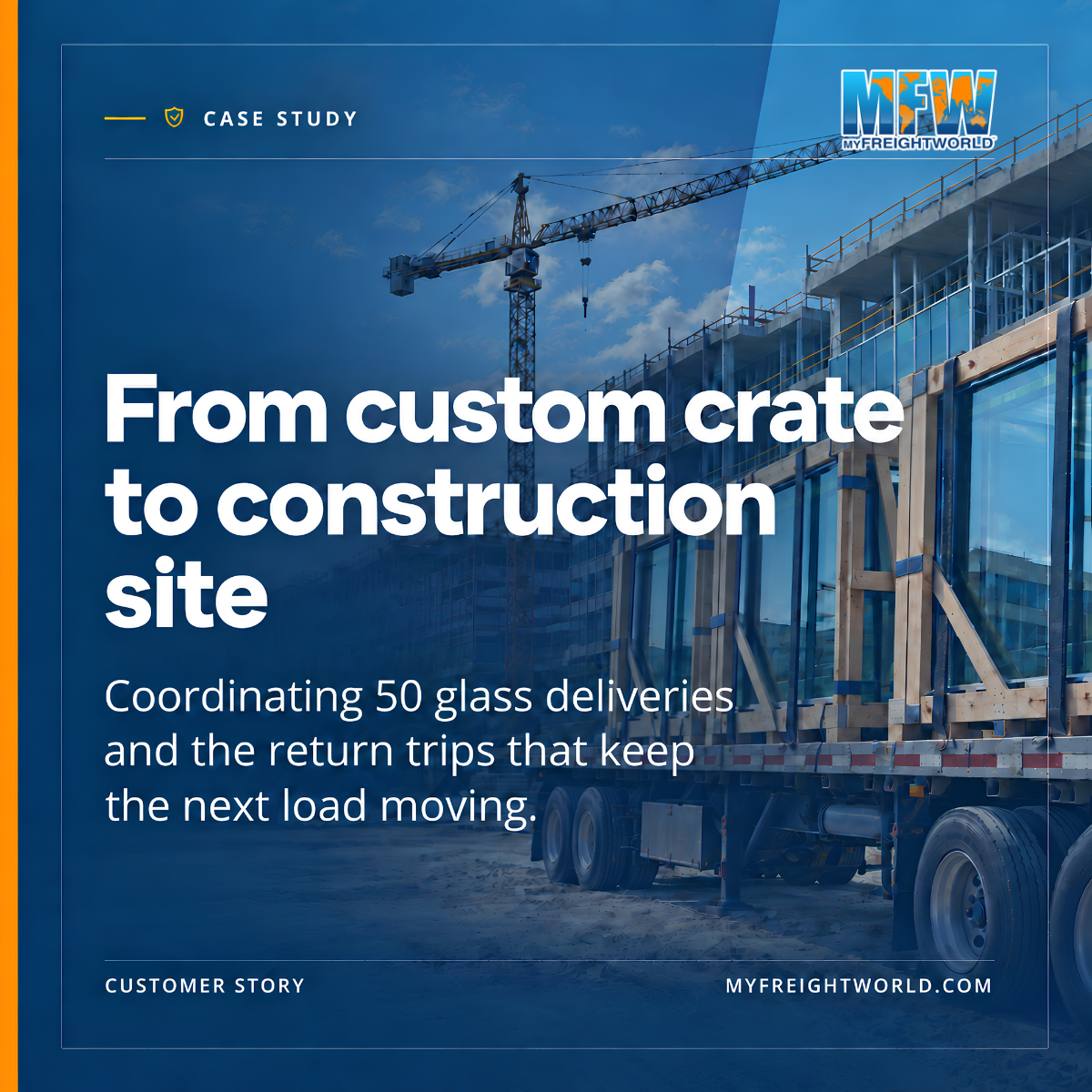
A healthcare facility under construction in the Midwest required approximately 50 shipments of custom glass over four months. But there was a problem: coordination. Each delivery had to arrive on the exact day a crane was onsite. A day late meant idle crews, delayed construction timelines, and costs that balloon fast on projects at this scale. Worse, the empty custom crates needed to return to the manufacturer to be refilled and shipped again. Miss those return pickups, and the next glass delivery gets held up. One logistics failure cascades into the entire project falling behind.
Why This Matters
Construction schedules are measured in days, not weeks. A four-month project with a fixed completion date can’t absorb delays. For every day behind, subcontractors sit idle, crews reallocate to other jobs, and project margins erode. At a healthcare facility, delays can also affect occupancy timelines and revenue generation. The stakes weren’t abstract, they were financial and real.
How We Solved It
Our representative took a strategic approach to this challenge, recognizing it went beyond managing individual shipments. Instead of handling each delivery in isolation, they evaluated the full scope of the customer’s needs and transportation options.
Outbound glass deliveries
53-foot flatbeds and Conestoga trailers were compared across dedicated and spot rates. The rep provided a full cost breakdown for each option, showing the customer exactly what flexibility costs and when to lock in dedicated service. This gave them pricing certainty without overspending on dedicated capacity for every load.
Return crate logistics
This is where most brokers drop the ball. The rep recognized that empty crates sitting at the jobsite delay the manufacturer’s packing schedule, which delays the next glass shipment. So hotshot transportation was arranged for the 25-30 return trips, coordinated to move crates back as soon as they were unloaded. The timing wasn’t random, it was tied to when the manufacturer needed them refilled.
The real work
Managing both directions simultaneously. As the third shipment was being delivered, the rep was already scheduling its crate returns and confirming the fourth shipment’s pickup. One delay in either direction could trigger a chain reaction. The rep built in buffer days and kept communication tight with the customer’s site coordinator.
The Numbers
| Metric | Value |
|---|---|
| Shipments coordinated | 75-80 (50 outbound, 25-30 return) |
| Timeline | August through November (16 weeks) |
| Cost savings vs. independent carriers | Approximately 12-15% through rate optimization |
| Repeat business | Customer has already booked two additional facilities |
What This Means
Complex, bidirectional projects need brokers who see the full workflow. The glass was important, but the crates coming back were the hidden variable that determined whether timelines held or fell apart. Rate optimization only works when it’s backed by flawless execution. Pricing flexibility only matters if the loads actually arrive when promised.
Manage Your Project Timeline
Let us handle the coordination. From equipment selection to return logistics, we’ll keep your project on schedule.