

Choosing between full truckload and less than truckload is one of the most common decisions a shipper makes, and it has a direct effect on cost, speed, and damage risk. The right answer depends mostly on the size of your shipment and how quickly it needs to arrive.
This guide compares FTL and LTL across the factors that matter, then gives you a simple rule for the crossover point. If you are still learning the basics of truckload, our explainer on what full truckload shipping is is a good starting point.
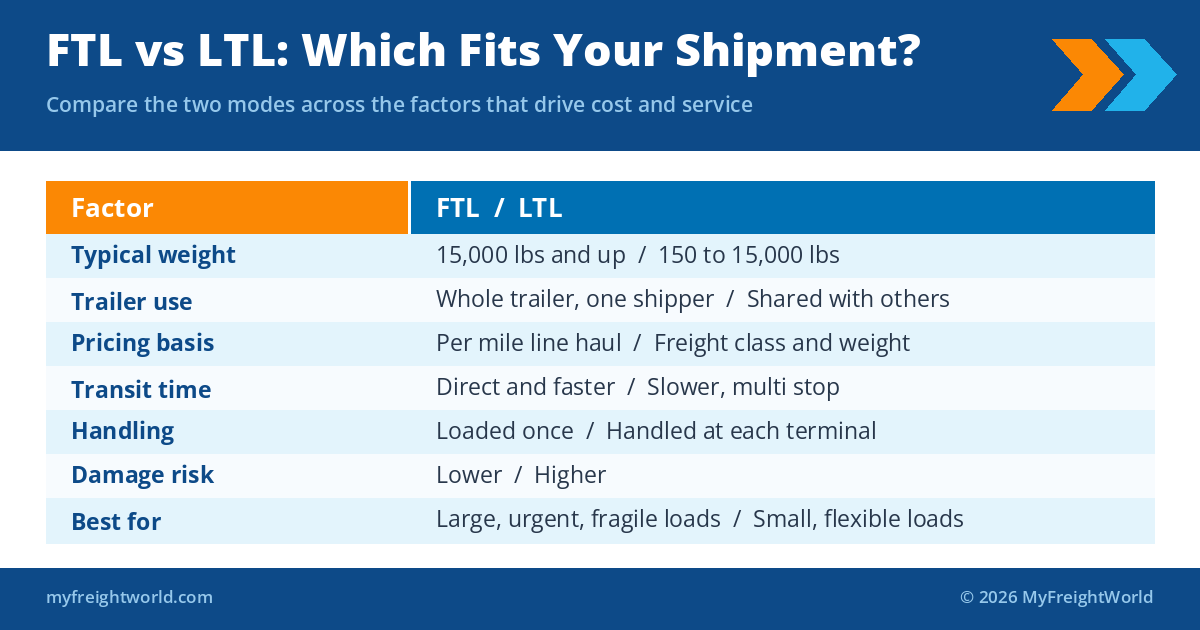
Use full truckload for loads over roughly 15,000 pounds, six or more pallets, or any freight that is urgent or fragile. Use LTL for smaller, more flexible shipments where a few extra days in transit are acceptable. Around 12 to 15 pallets, FTL often becomes the better value.
The Core Difference
Full truckload dedicates an entire trailer to your freight. Less than truckload combines several shippers’ freight on the same trailer, with stops and terminal transfers along the way. That single difference drives everything else: how you are priced, how fast the load moves, and how many times it is handled.
Cost: How Each Mode Is Priced
LTL is priced by freight class, weight, and dimensions, plus accessorials. FTL is priced per mile for the whole trailer regardless of how full it is. For small shipments, paying only for the space you use makes LTL cheaper. As your shipment grows, the per pallet cost of LTL climbs until a full trailer becomes the better deal. Our guide to full truckload rates explains the per mile math in detail.
Speed and Handling
FTL moves directly from pickup to delivery, so transit is faster and more predictable. LTL stops to pick up and drop off other freight and passes through terminals, which adds days and more touch points. Every extra handling step is another chance for damage, which is why fragile and high value freight usually belongs on a dedicated trailer.
The Crossover Point
As a practical rule, shipments under about six pallets or 15,000 pounds favor LTL, and shipments above that favor FTL. The exact crossover depends on your lane, freight class, and current market rates. When a shipment lands in the middle, partial truckload can be a smart third option, giving you direct transit without paying for a full trailer. In practice, start comparing a spot truckload quote against your LTL rate once a shipment reaches about 10,000 to 12,000 pounds, the range where truckload often pulls even on price while adding speed.
Do not choose on base rate alone. A cheap LTL quote can grow with accessorials, reweighs, and class disputes. Compare the all in cost and the transit time, not just the headline number.
Ready to move a full truckload?
Get matched with vetted FTL capacity and competitive rates. Most lanes quote same day.
Request an FTL QuoteFrequently Asked Questions
At what weight should I switch from LTL to FTL?
Most shippers move to full truckload once a shipment passes roughly 15,000 pounds or six to twelve pallets. Above that range, LTL class and handling charges usually make a dedicated trailer the better value.
Is LTL or FTL better for fragile freight?
FTL is better for fragile or high value freight because it is loaded once and never transferred between terminals. Fewer touch points means a lower chance of damage.
What is partial truckload?
Partial truckload is a middle option for large shipments that do not fill a trailer. Your freight shares the trailer but moves more directly than LTL, often with less handling and competitive pricing.
Can a broker help me choose?
Yes. A freight broker like MyFreightWorld can quote both modes and recommend the one that fits your weight, timeline, and budget.
Does FTL have lower damage rates than LTL?
Generally yes. Full truckload freight is loaded once and is not transferred between terminals, so it is handled far less than LTL. Fewer touch points means a lower chance of damage, which is why fragile and high value loads usually move FTL.
Get the Right Mode for Your Load
The best mode is the one that matches your shipment size and timeline at the lowest all in cost. MyFreightWorld quotes both FTL and LTL, so you can compare and choose with confidence. Visit the truckload freight hub for more, or request a quote to see real pricing for your lane. For long, heavy lanes where timing is flexible, intermodal freight shipping can lower cost further.
Not sure which mode fits?
Send your shipment details and we will quote FTL and LTL so you can compare cost and transit side by side.
Request a Freight Quote