
Choosing the wrong container is one of the easiest ways to stall an intermodal shipment before it ever reaches a railcar. Pick a box that is too small and you split the load; pick the wrong type and it will not fit the chassis or the rail well. Getting the container right up front keeps the move smooth and the cost predictable.
This guide walks through what makes a container intermodal, the sizes and types you will actually encounter, how much each one holds, and how the container, chassis, and freight fit together. If you are new to the mode, our intermodal freight services overview covers the bigger picture first.
Most inland US intermodal moves in 53-foot domestic containers. Import and export freight rides in 20-foot and 40-foot ISO containers. Match the box to your freight’s size, weight, and origin, and confirm chassis availability, before you book.
What Makes a Container Intermodal
An intermodal container is a standardized steel box built to move across trucks, trains, and ships without the freight inside being touched. Corner castings let a crane lift it cleanly between a chassis and a railcar, and standardized dimensions mean it fits rail wells and ship cells the same way every time. That is the whole point of the mode: load once at origin, and the same container travels the rail line haul and both truck legs without rehandling.
This is what separates a container from a standard dry van trailer. A dry van is a trailer with wheels permanently attached. An intermodal container is just the box; it rides on a separate chassis for the road legs and gets lifted off for the rail leg.
Domestic 53-ft vs ISO 20/40-ft Containers
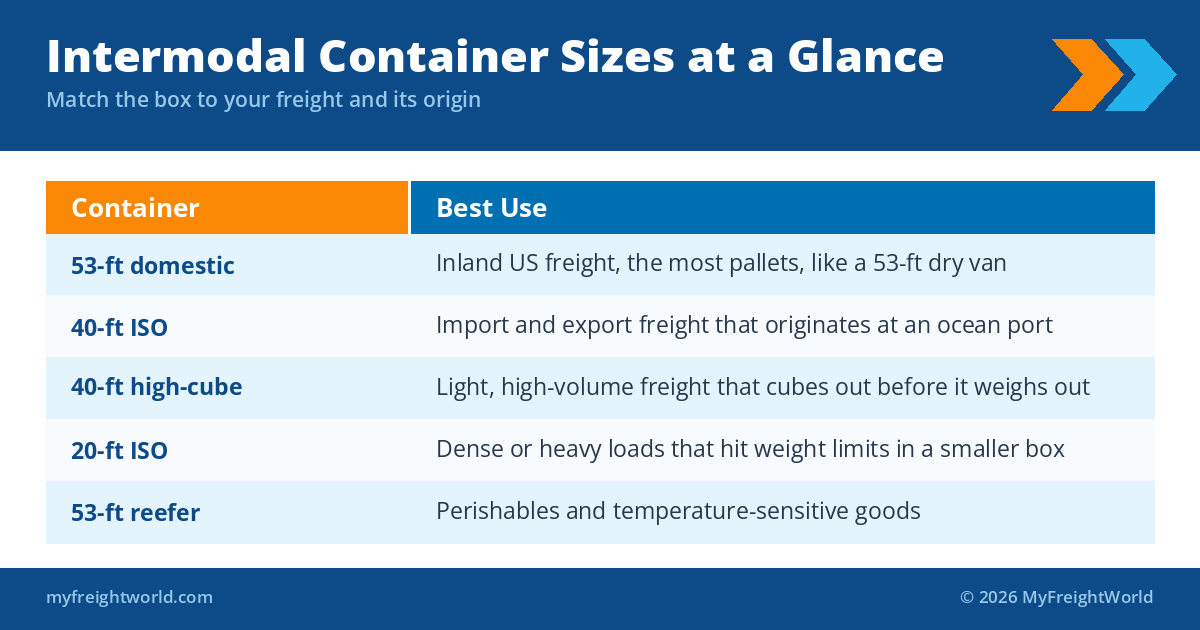
The biggest source of confusion for new intermodal shippers is the split between domestic and ISO containers. The 53-foot domestic container is the workhorse for freight moving within the US; it holds the most pallets and matches the capacity shippers are used to from a 53-foot dry van. The 20-foot and 40-foot ISO containers come from the ocean side of the supply chain and show up on import and export moves, often drayed straight off the port.
The practical difference is capacity and weight. A 53-foot box carries the most volume, while shorter ISO containers are often used for dense or heavy loads that would hit weight limits long before they filled a larger box. Matching the size to your freight’s density is how you avoid paying to ship air or, worse, getting stuck over weight.
Container Types Beyond the Standard Dry Box
Most intermodal freight rides in a standard dry container, but a few specialized types matter for the right freight. High-cube containers add about a foot of interior height for light, high-volume goods that cube out before they weigh out. Refrigerated containers, or reefers, carry their own cooling unit for perishables and temperature-sensitive products. If your freight needs temperature control or unusual dimensions, flag it early, because specialized equipment is less common and needs to be sourced ahead of time.
Containers, Chassis, and Who Supplies Them
On the road legs, the container does not roll on its own. It rides on a chassis, a wheeled frame that the container locks onto for drayage and the chassis move between ramp and dock. Chassis come from pools, from the carrier, or from the shipper’s own fleet, and chassis availability is one of the most common sources of delay in tight markets.
Confirm chassis availability when you book, not at pickup. A container with no chassis under it cannot leave the ramp, and chassis shortages are a frequent and avoidable cause of detention charges.
Need the Right Box?
We match your freight to the right container and confirm equipment before you ship.
Get an Intermodal QuoteFrequently Asked Questions
What is the most common intermodal container size?
For freight moving within the US, the 53-foot domestic container is the most common. It holds the most pallets and matches the capacity of a standard 53-foot dry van.
What is the difference between a domestic and an ISO container?
Domestic 53-foot containers are built for inland US intermodal. ISO containers, usually 20-foot and 40-foot, originate on the ocean side and appear on import and export moves drayed from a port.
Do I need to provide the chassis?
Not usually. Chassis come from pools, the carrier, or a shipper’s own fleet. The important thing is to confirm availability when booking, since chassis shortages are a common cause of delay.
Can intermodal containers carry refrigerated freight?
Yes. Refrigerated containers, called reefers, carry their own cooling unit for perishables and temperature-sensitive goods. They are less common, so source them ahead of time.
How much weight can an intermodal container hold?
It varies by container and by legal weight limits on the road and rail legs. Dense or heavy freight often uses shorter ISO containers to stay within limits, while lighter freight uses a 53-foot box for volume.
Match the Container to Your Freight
The right container comes down to three questions: how big and heavy is the freight, where does it originate, and does it need any special handling. Inland US volume usually means a 53-foot domestic box; import and export freight means an ISO container off the port; temperature or dimension needs mean specialized equipment sourced in advance. MyFreightWorld matches your freight to the right container and lanes and confirms the equipment before the shipment moves, so nothing stalls at the ramp.
Ready to Ship Smarter?
Get an intermodal shipping quote and we will line up the right container for your freight.
Get an Intermodal Quote