
Intermodal freight is often 10 to 25 percent cheaper than full truckload on long lanes, but the rate you are quoted has more moving parts than a single line-haul price. An intermodal move is really three priced services stitched together: a truck on each end and a railroad in the middle. Understand how those parts add up and you can see exactly where your money goes, and where you have room to bring the cost down.
This guide breaks down what makes up an intermodal rate, the variables that push it up or down, how it compares to truckload on the same lane, and the levers shippers actually use to cut spend. If you want the broader picture first, start with our intermodal freight services overview, then come back here for the pricing detail.
An intermodal rate combines rail line-haul, drayage on both ends, fuel, and accessorials. Rail wins on lanes roughly 500 miles and longer, where the cheaper line-haul outweighs the two drayage legs. The biggest savings levers are consistent volume, flexible delivery windows, and matching the right mode to each lane.
What makes up an intermodal rate
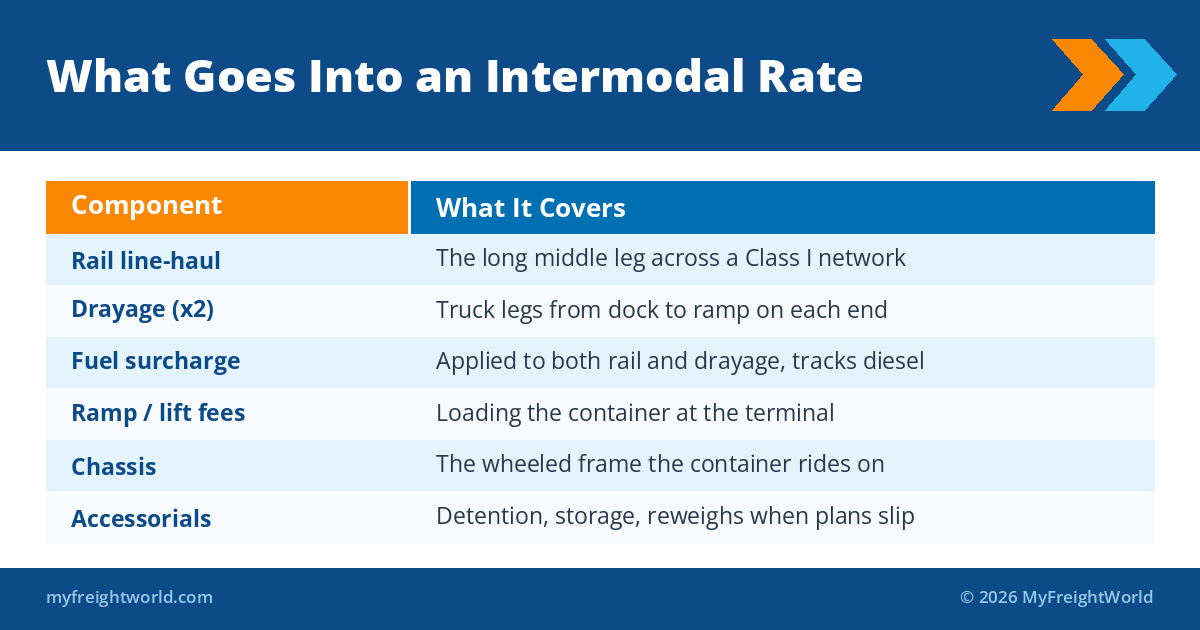
When you get one all-in intermodal price, you are really paying for several distinct services. Knowing the components tells you which costs are fixed and which you can influence.
The rail line-haul is the long middle leg, the container moving across a Class I railroad network. It is usually the largest single piece of the rate and the reason intermodal beats trucking on distance, because rail moves a ton of freight far more cheaply per mile than a truck can. Origin and destination drayage are the two short truck legs that carry the container between your dock and the rail ramp. Fuel surcharges apply to both the rail and drayage portions and move with diesel and rail fuel indexes. Ramp and lift fees cover loading the container at the terminal, and chassis charges cover the wheeled frame the container rides on during drayage. Accessorials, things like detention, storage, and reweighs, are the variable extras that show up when something does not go to plan.
What drives your rate up or down
Two shippers moving the same commodity can pay very different intermodal rates. The difference comes down to a handful of variables.
Lane length is the first. The longer the haul, the more the cheap rail line-haul works in your favor against the fixed cost of the two drayage legs. Lane direction and balance matter just as much: railroads and drayage carriers price headhaul lanes (the busy direction) differently from backhaul lanes, and a lane where equipment naturally needs to reposition can be cheaper. Volume consistency helps, because steady weekly freight on a lane earns better container allocation and rates than one-off shipments. Container and chassis availability swing the price when equipment is tight in a given market. And fuel and seasonality move the whole rate, with peak shipping season and produce season tightening capacity and lifting prices.
Intermodal vs truckload cost: when rail wins
The single biggest question shippers ask is when intermodal actually beats a truck on price. The honest answer is that it depends on distance and timing, not on intermodal being cheaper everywhere.
The rough break-even is around 500 miles. Below that, the two drayage legs eat up most of the savings and full truckload is usually cheaper and faster all-in. Above it, the rail line-haul advantage compounds, and on long headhaul lanes of 1,000 miles or more intermodal often lands 10 to 25 percent under the comparable truckload rate. The tradeoff is transit time, intermodal typically adds a day or more versus a team or solo truck. For a full side-by-side on choosing between the two modes, see our guide on intermodal vs truckload, and if a lane turns out to favor the road, MFW also handles full truckload directly.
See Your Lane Priced Both Ways
Not sure whether rail or truck wins on your lane? MFW prices the full door-to-door move and shows you the tradeoff.
Get an Intermodal QuoteHow to cut your intermodal spend
Once you know what drives the rate, the savings levers are straightforward. None of them require you to accept worse service, just smarter planning.
Commit consistent volume on a lane so carriers can plan equipment around you and reward you with better pricing. Offer flexible pickup and delivery windows, because rail departs ramps on set days and a rigid appointment can force a more expensive routing or an extra drayage charge. Match the mode to the lane instead of forcing everything onto rail or everything onto trucks, since a mixed network almost always costs less than a single-mode one. Reduce accessorials by turning containers fast and avoiding detention and storage at the ramp. And use a broker’s contracted rates and lane leverage rather than buying spot, which both lowers the rate and locks it in. For a concrete example of these levers in action, read a real intermodal savings example.
Watch detention and storage. Free time at the rail ramp is limited, and a container that sits past it racks up per-diem and storage fees fast. These accessorials are the most common reason a quoted rate balloons on the invoice, and they are almost entirely within the shipper’s control.
Frequently Asked Questions
How much cheaper is intermodal than truckload?
On qualifying lanes of roughly 500 miles or more, intermodal typically runs 10 to 25 percent below the comparable full truckload rate. The savings grow with distance, so the longest headhaul lanes show the biggest gap. On short lanes the advantage disappears because the two drayage legs cost the same regardless of how long the rail middle is.
Why did my intermodal invoice come in higher than the quote?
Almost always because of accessorials, most commonly detention, per-diem on the container, or ramp storage when the box was not turned within free time. The base rate components rarely change after booking, but variable charges tied to how the shipment is handled can be added. Turning containers quickly and giving accurate dimensions and weight up front keeps the invoice close to the quote.
Are intermodal rates locked at booking?
Through a broker with contracted rail rates, the core rate is generally locked at the time of booking, unlike spot truckload pricing that floats with the market. Fuel surcharges follow a published index and accessorials depend on handling, but the base line-haul and drayage you agree to at booking is what you pay.
What information do I need to get an accurate intermodal rate?
Origin and destination ZIP codes, the commodity, total weight, dimensions, and your target ship date. Weight and commodity matter because rail has weight limits per container and some commodities are restricted, and the ship date affects which ramp departure you catch.
Get an accurate intermodal rate from MFW
Because an intermodal rate is built from several services, the easiest way to know your real cost is to have one party price the entire door-to-door move at once. MFW books the rail leg and dispatches drayage on both ends, then quotes you a single all-in rate that is typically locked at booking. You get the rail economics without having to assemble the pieces yourself or chase three different invoices.
Send us your lane and freight details and we will show you what intermodal costs, how it compares to truckload, and where the savings are.
Ready to Ship?
Get a single all-in intermodal rate for your lane, drayage and rail included, often locked at booking.
Get an Intermodal Quote