
Moving freight by intermodal means coordinating a railroad, two drayage carriers, container and chassis supply, and tracking across all of it. Doing that yourself on every shipment is a real job. An intermodal freight broker takes that coordination off your plate and, on the right lanes, lowers your total cost at the same time.
This article explains what an intermodal freight broker actually does, how that compares to going direct to a railroad, when using a broker makes sense, and how to choose a good one. If you want the mode basics first, start with our intermodal freight services overview.
An intermodal freight broker arranges and manages the full rail-plus-truck move: lane analysis, rail capacity, containers and chassis, and the drayage on both ends, under one point of contact. Use one when you are new to intermodal, have variable volume, or ship lanes without easy ramp access.
What an Intermodal Freight Broker Actually Does
A broker starts by analyzing your lane and recommending whether intermodal even makes sense versus over the road. If it does, they secure the rail line haul capacity, source the container and chassis, and arrange the drayage carriers at origin and destination. From there they manage tracking, handle exceptions when a ramp backs up or a chassis runs short, and give you a single point of contact for the whole move instead of a phone tree of vendors.
Port-origin freight adds another layer, and a broker coordinates that too, lining up the port drayage with the rail and final delivery so the container does not sit accruing fees.
Broker vs Going Direct to a Railroad
You can contract directly with a railroad, and for very high, steady volume on a single lane that can work well. The tradeoff is that a railroad gives you one network, and you are responsible for sourcing equipment and arranging the first and last mile yourself. A broker compares multiple rail networks, pulls equipment from more sources, and manages the drayage legs as part of the package.
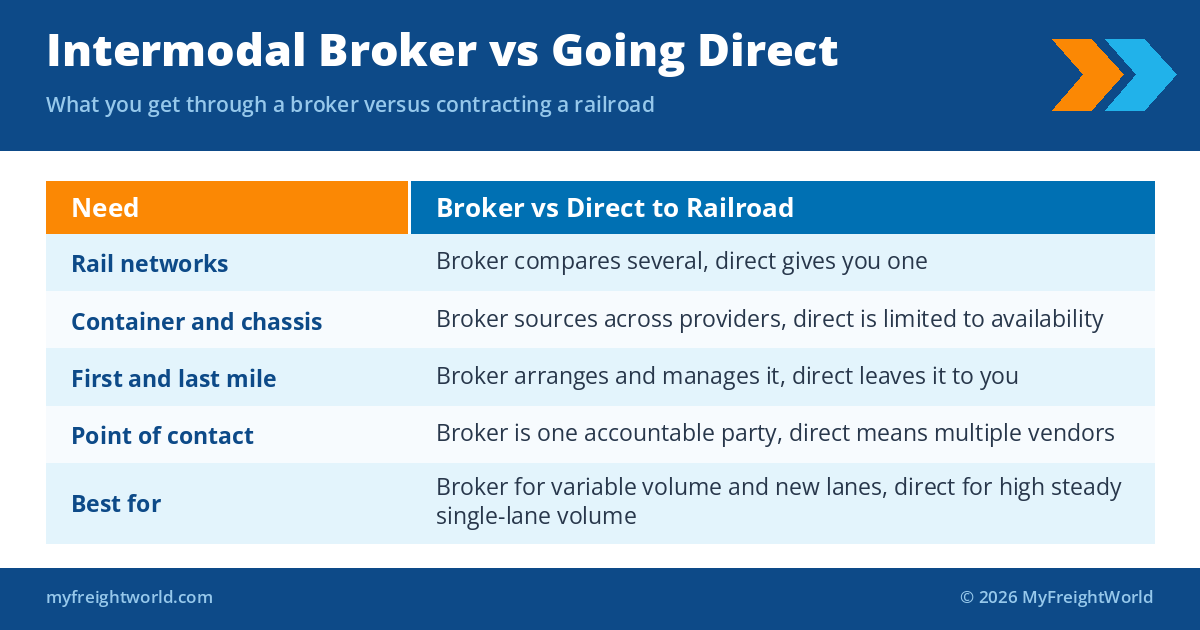
For most shippers, especially those whose volume moves across different lanes or changes month to month, the broker model removes more headaches than going direct, and it keeps one party accountable end to end.
When to Use an Intermodal Broker
A broker earns its place in a few clear situations: when you are new to intermodal and testing whether a lane works, when your volume is seasonal or variable rather than steady, when your lanes do not have easy ramp access, or when you simply want one accountable partner across rail and truck rather than juggling vendors. If any of those describe your freight, a broker usually pays for itself in saved time and avoided fees.
Simplify Your Intermodal
Let one partner handle the rail, the containers, and the drayage on both ends.
Get an Intermodal QuoteHow to Choose an Intermodal Freight Broker
Not all brokers are equal. Look for lane and ramp coverage that matches where you ship, real equipment access in tight markets, clear visibility and communication so you are not chasing updates, and a track record you can check with references. The right broker should be able to talk specifically about your lanes, not just intermodal in general.
Frequently Asked Questions
What does an intermodal freight broker do?
They arrange and manage the full rail-plus-truck move: lane analysis, securing rail capacity, sourcing containers and chassis, arranging drayage on both ends, and managing tracking and exceptions under one point of contact.
Is using a broker more expensive than going direct?
Not usually. A broker compares multiple rail networks and equipment sources and manages the drayage, which often lowers total cost and avoids fees, especially for variable volume or lanes without easy ramp access.
When should I use an intermodal broker instead of a railroad directly?
Use a broker when you are new to intermodal, have seasonal or variable volume, ship lanes without easy ramp access, or want one accountable partner across modes. Going direct can fit very high, steady single-lane volume.
Does an intermodal broker handle the drayage too?
Yes. A full-service intermodal broker arranges and manages the first-mile and last-mile drayage as part of the move, including port drayage on import and export freight.
How do I choose a good intermodal freight broker?
Check lane and ramp coverage, equipment access in tight markets, visibility and communication, and a verifiable track record. A strong broker can speak specifically to your lanes.
Work with MyFreightWorld as Your Intermodal Broker
MyFreightWorld runs the whole intermodal move as one managed service: analyzing your lanes, securing rail capacity and equipment, and coordinating the drayage at both ends, with a single point of contact and clear visibility throughout. If you are weighing intermodal for the first time or want to take the coordination off your team, that is exactly what we do.
Ready to Ship Smarter?
Get an intermodal shipping quote and put one accountable partner on your lanes.
Get an Intermodal Quote